
Most prospects do not disappear because they were never interested.
They disappear because the follow-up system was unclear, inconsistent, or never inspected.
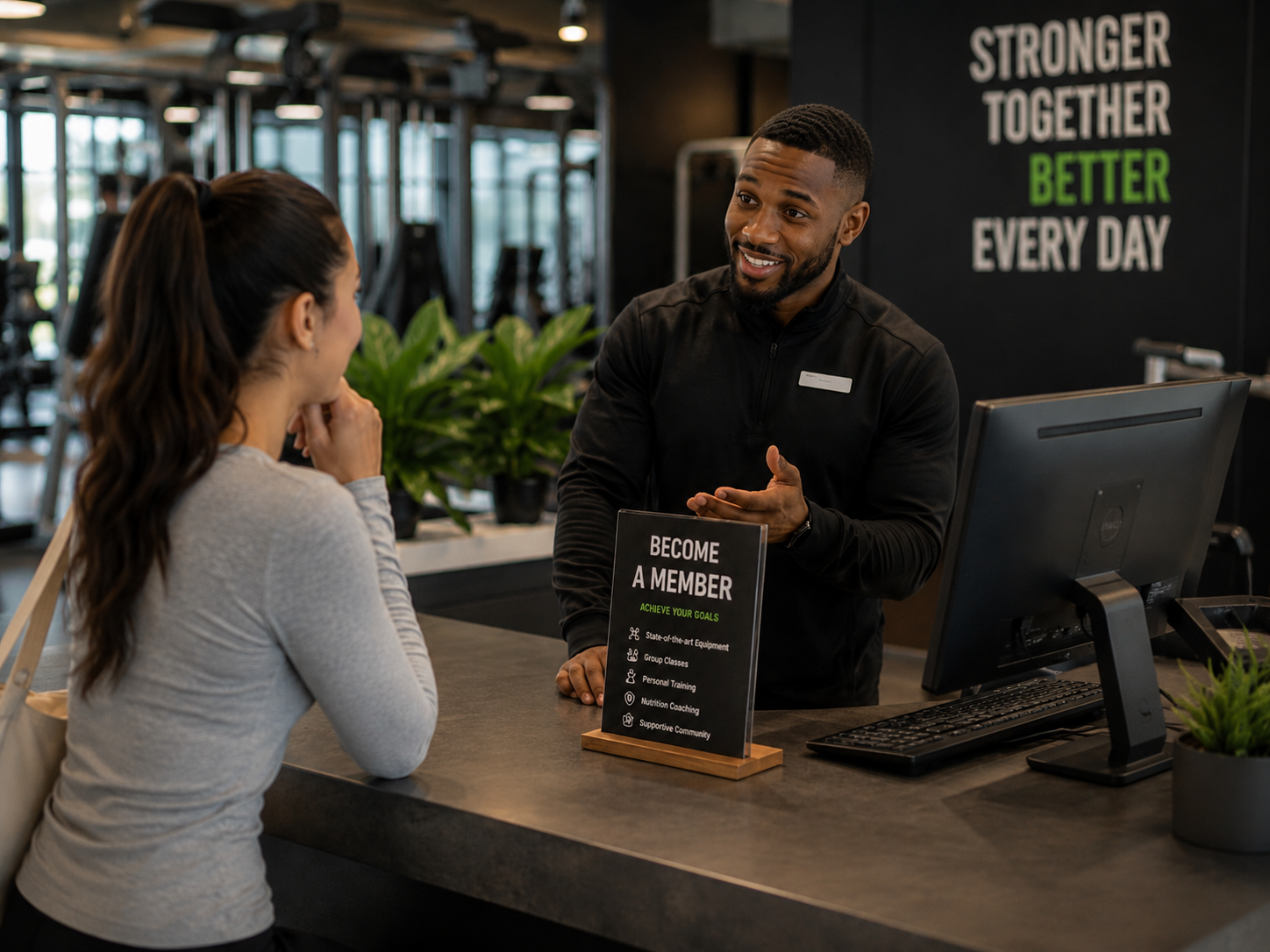
A prospect walks into the gym. They ask questions. They take a tour. They seem interested. Maybe they even say they need to think about it.
Then they leave.
After that, one of three things usually happens:
No one follows up.
Someone follows up once and stops.
The follow-up is generic and does not connect back to what the prospect cared about.
That is how gyms lose opportunities.
Not because the prospect was not a good fit.
Not because the price was always too high.
Not because the facility was not good enough.
Many times, the lead was there. The interest was there. The opportunity was there.
The system was not.
The First Visit Is Not the End of the Sale
A lot of gyms treat the first visit as a one-time chance.
If the prospect joins, great.
If they do not join, the opportunity fades away.
But in reality, many prospects need more than one touchpoint before making a decision.
They may need to talk to a spouse.
They may need to compare options.
They may need to think about their schedule.
They may need to build confidence.
They may need to understand the value more clearly.
That does not mean they are not interested.
It means the team needs a follow-up process.
The first visit should create momentum. Follow-up should protect that momentum.
Reason 1: The Prospect Was Never Properly Captured
You cannot follow up with a prospect you did not capture.
This is one of the biggest membership growth breakdowns in fitness organizations.
Someone walks in, asks questions, maybe takes a tour, and leaves without complete contact information being entered into a CRM or lead system.
No name.
No phone number.
No email.
No lead source.
No notes.
No reason for visiting.
No next step.
At that point, the organization is relying on memory.
That is not a system.
Every first visit should be captured. Walk-ins, guest passes, phone inquiries, web leads, referrals, trial visitors, and former members should all be entered into a prospect management process.
If the lead is not captured, the lead cannot be worked.
Reason 2: The Tour Had No Clear Next Step
A strong tour should never end with confusion.
Too often, prospects leave with a brochure and a vague message:
“Let us know if you have questions.”
That leaves the responsibility on the prospect.
A better ending creates clarity.
If they join, the next step is onboarding.
If they do not join, the next step is follow-up.
The staff member should know exactly what happens next before the prospect leaves.
Examples:
“I’ll call you tomorrow afternoon after you have a chance to talk it over.”
“I’ll send you the membership option we discussed and check in on Thursday.”
“Let’s schedule a time for your spouse to come in so we can walk through it together.”
“I’ll follow up after your trial visit and help you decide if this is the right fit.”
When there is no next step, the opportunity becomes easy to lose.
Reason 3: Follow-Up Is Too Generic
Generic follow-up sounds like this:
“Hi, just checking in to see if you have any questions.”
That is better than no follow-up, but it is not strong enough.
A better follow-up connects back to the prospect’s goals.
Example:
“Hi Sarah, this is Kevin from Grow Fitness. I enjoyed meeting you yesterday. You mentioned wanting to rebuild consistency and find a routine that fits around work. I wanted to follow up and see what questions came up after the tour.”
That message feels different because it shows the prospect was heard.
Strong follow-up should include:
- The prospect’s name
- What they cared about
- The membership option discussed
- A clear next step
- A helpful tone
The goal is not to pressure them. The goal is to continue the conversation.
Reason 4: Staff Members Avoid Follow-Up Calls
Many staff members are uncomfortable making follow-up calls.
They may feel like they are bothering people.
They may not know what to say.
They may be afraid of rejection.
They may not understand how follow-up connects to membership growth.
This is why training matters.
Leaders cannot simply say:
“Make your calls.”
They need to coach the skill.
A strong follow-up call should feel helpful, not pushy.
The staff member can say:
“Hi, this is Kevin from the gym. I wanted to follow up from your visit yesterday. You mentioned wanting to get back into a routine and feel more consistent. I wanted to see what questions came up and help you decide if getting started this week still makes sense.”
That is a service conversation.
If the team believes follow-up is pressure, they will avoid it. If they understand follow-up as support, they will do it with more confidence.
Reason 5: Leaders Do Not Inspect the Follow-Up System
What leaders inspect improves.
If leaders only inspect total joins, they miss the behaviors that create joins.
A membership leader should be able to answer:
How many prospects visited yesterday?
How many were entered into the CRM?
How many received notes?
How many were called?
How many conversations happened?
How many appointments were created?
How many follow-ups are overdue?
Which staff members are completing follow-up?
Which prospects are closest to joining?
If leaders are not inspecting these behaviors, the team will drift.
Follow-up is not something that should happen only when people remember or when the front desk is slow. It should be part of the daily membership growth rhythm.
Reason 6: The Team Does Not Understand the Value of Speed
Speed matters.
The longer a prospect goes without hearing from the gym, the colder the opportunity becomes.
They may visit a competitor.
They may lose motivation.
They may forget details from the tour.
They may assume the organization is not that interested in helping them.
The best follow-up happens quickly.
Same day is ideal.
Next day is necessary.
Several days later is usually too late.
Fast follow-up communicates professionalism, interest, and care.
It also keeps the prospect connected to the emotion that brought them in the first place.
Reason 7: There Is No Clear Ownership
Another common breakdown is unclear ownership.
Who owns the follow-up?
The person who gave the tour?
The membership leader?
The welcome center team?
The sales team?
The manager?
If everyone owns it, no one owns it.
A strong system defines responsibility.
Each lead should have:
- An owner
- A next task
- A follow-up date
- Notes from the visit
- A clear status
This is where CRM visibility becomes powerful.
A good CRM should not just store names. It should help leaders and staff members manage real opportunities.
What a Strong Follow-Up System Looks Like
A strong first-visit follow-up system does not need to be complicated.
It needs to be consistent.
A simple structure could look like this:
Same Day
Send a thank-you message or make a quick call.
Purpose: reinforce the visit and offer help.
Next Day
Call with a personalized message connected to their goals.
Purpose: answer questions and ask for the next step.
Day Three
Send a helpful reminder or invite them back in.
Purpose: keep the opportunity warm.
Day Seven
Make one final value-based follow-up.
Purpose: create urgency and close the loop.
Each touchpoint should feel specific, personal, and connected to what the prospect wanted.
The Real Problem Is Not Effort. It Is System Design.
Most gym teams are not lazy.
They are busy.
They are pulled in different directions.
They are handling phones, check-ins, program questions, facility issues, member concerns, and administrative tasks.
If the system is not clear, follow-up will naturally fall through the cracks.
That is why membership growth cannot rely on memory.
It needs structure.
It needs leadership inspection.
It needs clear expectations.
It needs coaching.
It needs a CRM or lead management process that makes follow-up visible.
Final Thoughts
Most gyms lose prospects after the first visit because the organization does not have a strong enough system to keep the conversation moving.
The prospect was interested enough to visit.
That matters.
The question is whether the team captured the lead, understood the prospect’s goals, created a clear next step, followed up quickly, and inspected the process.
When that happens, more first visits turn into second conversations.
More second conversations turn into appointments.
More appointments turn into joins.
And more joins turn into sustainable membership growth.
Membership growth is not luck. It is a system.
Grow helps gyms, health clubs, and community fitness organizations build the sales systems, leadership cadence, CRM visibility, and frontline confidence needed to turn more prospects into members.
Ready to stop losing prospects after the first visit?
Book a free 15-minute discovery call with Grow.

Ready To Strengthen Your Membership Sales System?
Book a free 30-minute discovery call with Grow.